Contact Form

Name

Email *

Message *

Thursday, March 26, 2020

Interesting Brazil

     I saw some interesting plants while visiting in Brazil, plus some beautiful gardens.
     The first photo is of the "meeting of the waters," where the brown Amazon River meets the dark blue Rio Negro near Manaus, Brazil.  Because of different densities, it takes several miles before the waters mix completely.
     The next two photos are of the giant lily pads, Victoria amazonica, which can grow to 10 feet in diameter.
     There are some really tall trees in the Amazon basin, and the two photos are of an unknown species.
     Two trees have twisted trunks, as the next four photos show.  I would appreciate anyone telling me the names of any of these trees.
     The three photos showing the small plant with many-branched leaves is in the genus Selaginella, part of the group of ancient plants called Lycopods.  The selaginellas are commonly called spike mosses.
     The plants at the base of the rock wall in in the genus Anthurium, part of the family Araceae, commonly known as aroids.  It is commonly sold as a house plant.
     The last four photos were taken in the gardens of the central bank of Brazil in the city of Brasilia.  I would love to have the short, small-leafed plant, an herbaceous perennial, in my gardens.  I would appreciate knowing its name.


Monday, March 9, 2020

A guide to the gardens

Note: I will be visiting Brazil for two weeks, so there will not be a post for several weeks.

     I recently reworked some maps of my gardens to reflect the work I did last year in my back yard.  I am attaching four maps that will give viewers a better idea where various places are located when I discuss them.  The first maps covers the entire property and shows general locations of the various gardens.  The second gives a more detailed view of the front yard.  The last two show details of the back yard.  The property is 150 feet wide by 300 feet deep (or 45.7 by 91.4 meters)
     The blog was started on February 29, 2016.  You can view the posts from March 26 to April 7 of 2016 to view many photos showing the development of the gardens over the years.


Saturday, February 29, 2020

Louisiana calling

     I recently visited two beautiful and interesting locales in Louisiana.  I visited them both in the 1990s, and they deserved a repeat visit.
     The first, Longue Vue Gardens, is in New Orleans.  The house and gardens were developed from 1924 to the 1930s.  It was declared a National Historic Landmark in 2005.
     The second is the Atchafalaya Swamp, about a hundred miles west of New Orleans.  Two levees were built alongside it in the 1930s to prevent flooding following a devastating flood in 1927.  It is 2200 square miles in size, and it is primarily populated with bald cypress trees (Taxodium distichum).  Spanish moss (Tillandsia usneiodes), an epiphyte, commonly grows on the trees, and it was harvested by the Cajun people (French people originally from Nova Scotia in the 1760s) for use as car seat stuffing, diapers, and many other uses.


Thursday, February 13, 2020

Curiosities of Egypt

     Recently I was in Egypt, one of my favorite places in the world.  I found a few interesting plants there, in spite of the desert conditions.
     The first photo is of a shrub inside St. Katharine Monastery, built in the 6th Century.  Its location is at the spot where Moses is believed to have received the Ten Commandments on top of nearby Mt. Sinai.  He first was supposed to have received directions from God after he was drawn to a "burning bush" that was not consumed by fire.  This shrub is believed by many to be that same bush, alive after all the years since that event.  It is Rubus ulmifolius sanctus, the last epithet reflecting its religious significance.  Who knows for sure?   
   The next two photos of a tree in a park in the city of Aswan appears to be in the family Leguminaceae.  I thought the stem growing out of the trunk was interesting.
   The next two photos are of a neat desert shrub that I do not recognize.  I would appreciate an ID.
   I thought the last photo was kind of cute, with a statue of King Ramses II having a "halo" of palm leaves.  It was taken in the famous Karnak Temple in the city of Luxor.


Wednesday, January 29, 2020

Still more bricks

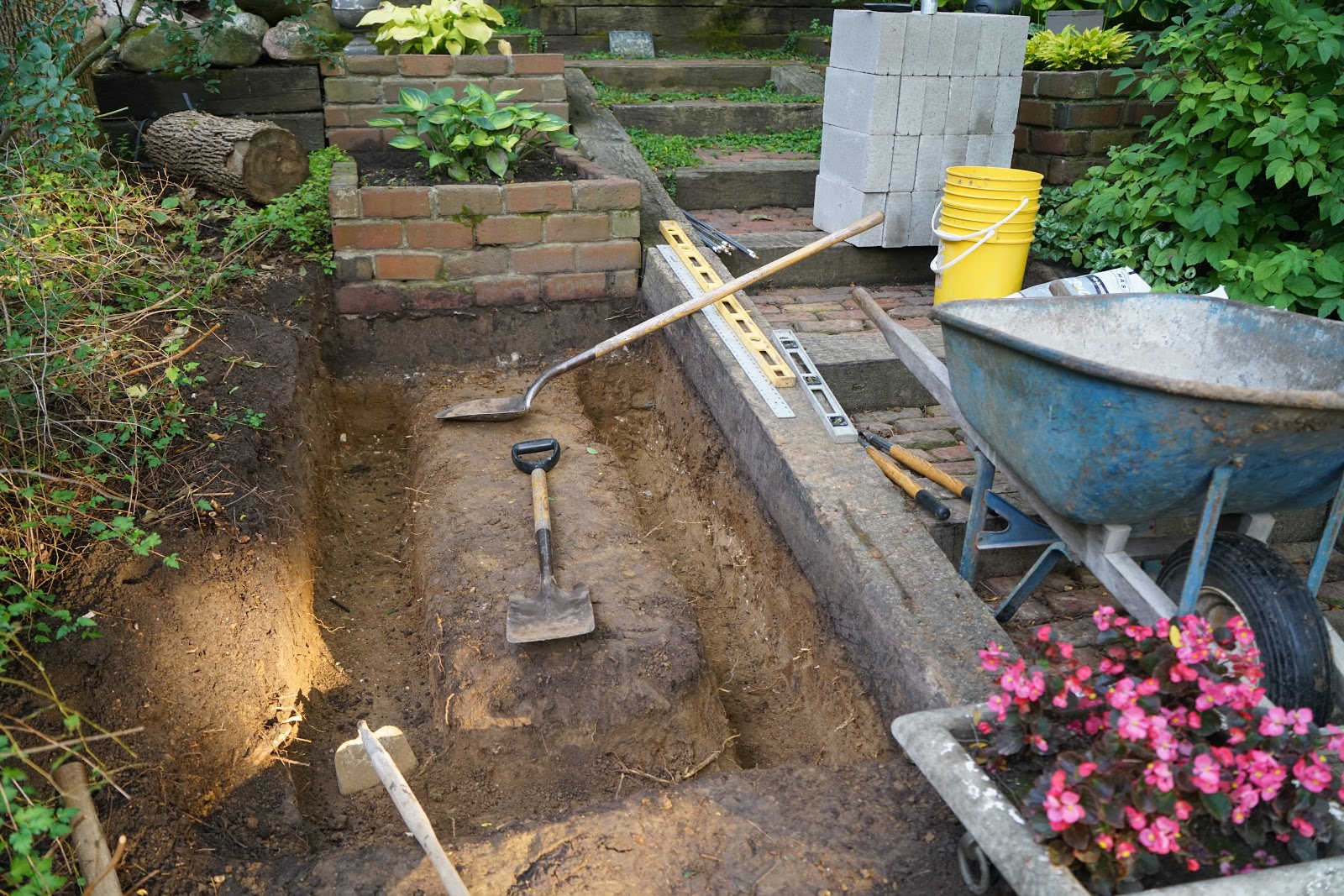
     I've collected over 5000 antique paving bricks originally used for streets in the early 1900s.  I found another use for them last fall, building a new planter between my back lawn and the shaded gardens towards the back of the lot.  I removed some Stephanandra incisa 'crispa' (Cutleaf Stephandra) and extended the existing planter, shown in the first photo.
     My wife always thought it would be fitting for me to be buried somewhere in my gardens, so I did a test, finding that the planter looked very much like a burial vault.  So, who knows?