Contact Form
Thursday, May 20, 2021
Thursday, May 6, 2021
Spring is here--I think.
Note: I would like to ask a favor of those who visit my blog. Because I cannot tell how many of my "visits" are real people or "bots" (computer-driven searches), please leave me a comment (such as, "real person," also telling me what country you live in--no name required). Thank you for your help.
I must be careful. On May 10, 1990 I had nine inches of heavy snow, which destroyed many of my trees, as their leaves were fully formed. Fingers crossed! I live in SE Wisconsin. When living in Madison in 1966, the area had a hard frost in low spots--on July 2nd. That was absurd!
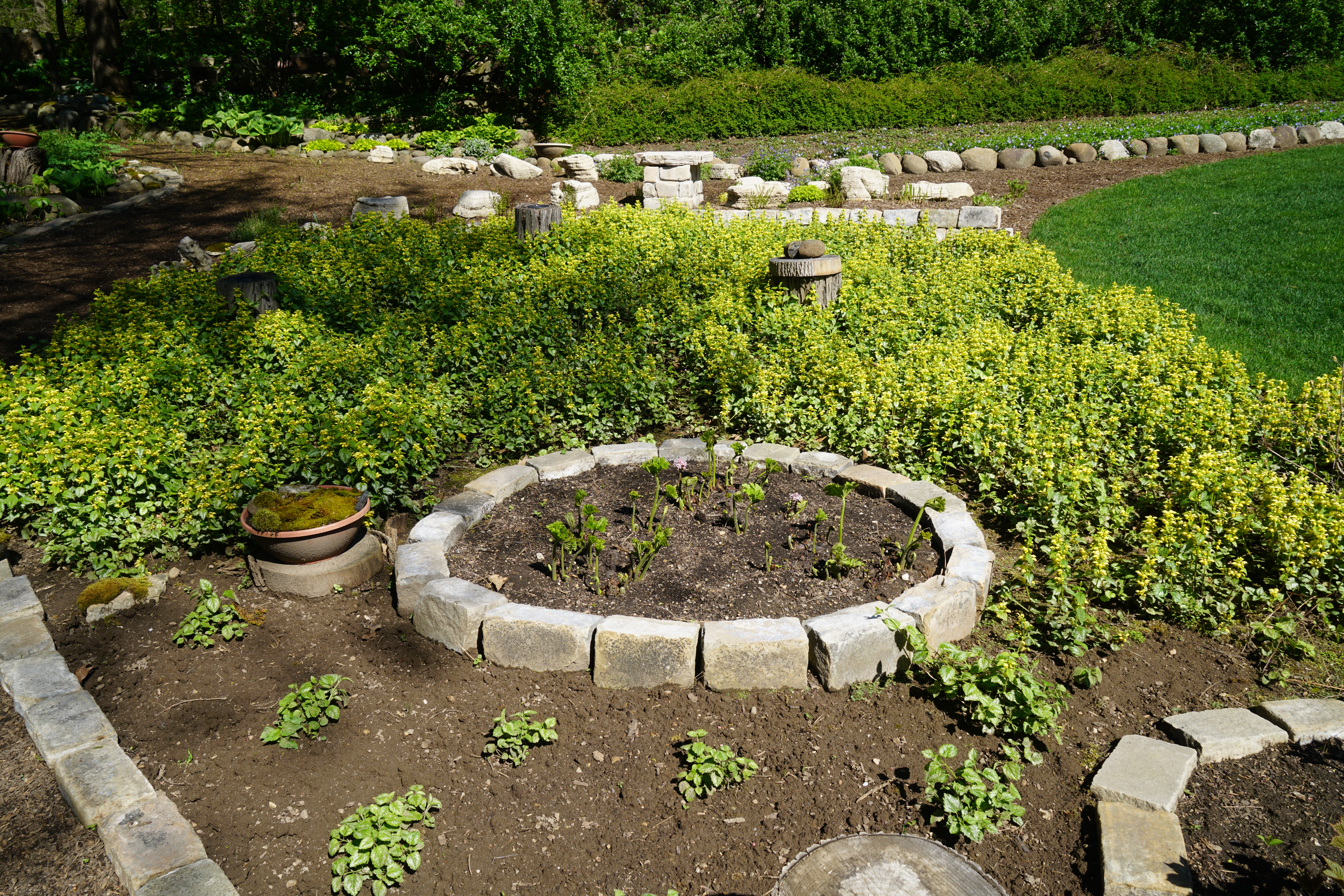
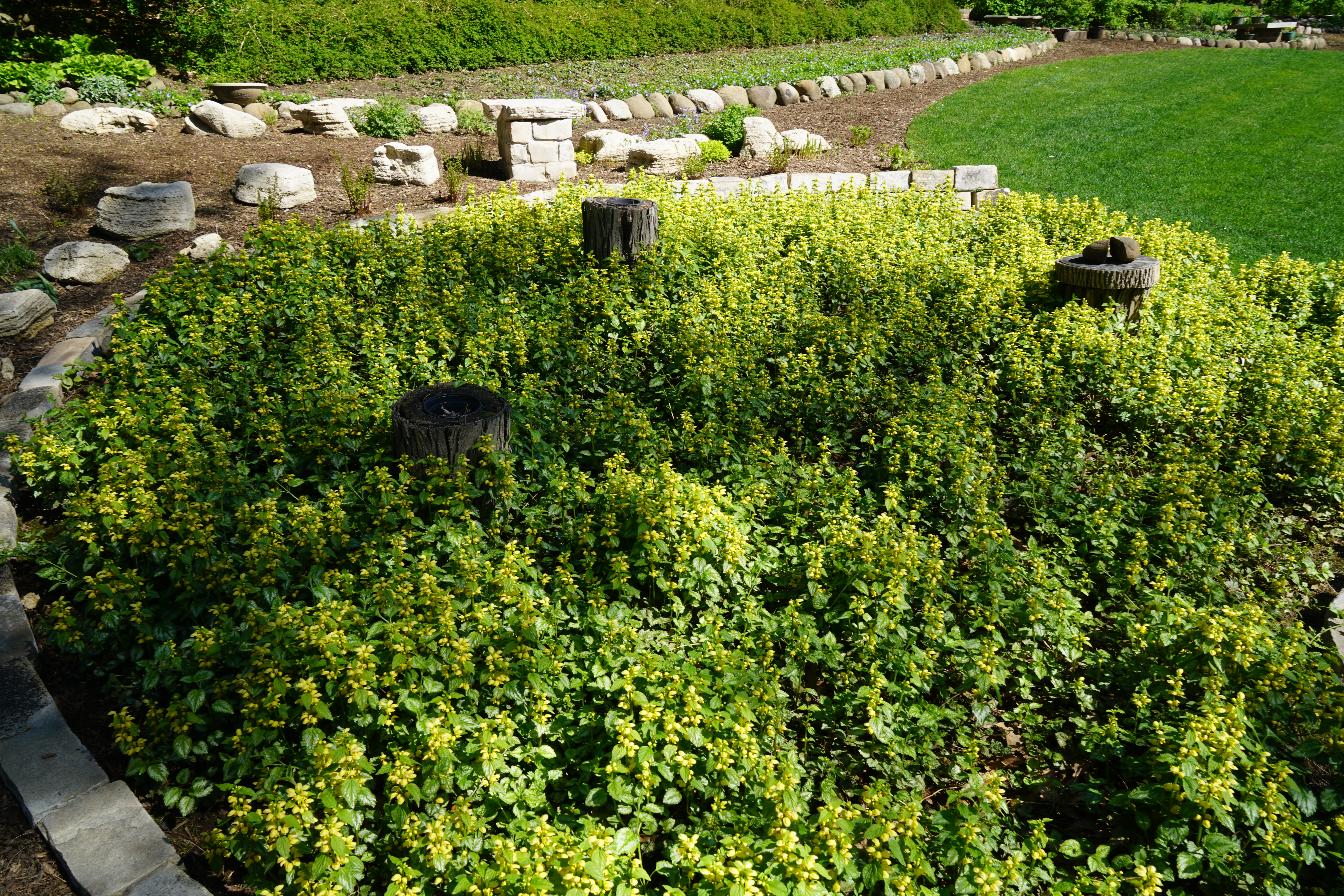
This area is on the back left side of my backyard. In 2019 I reduced the size of the lawn by a third, allowing me to build perennial gardens on all sides. I am still tweaking the plantings. The main plant shown here, with yellow flowers, is Lamiastrum galebdolon, or Yellow Archangel. It requires mostly shade to deep shade, and it vigorously spreads by stolons. It takes diligence to keep it under control.
Sunday, April 25, 2021
The bridge
Note: My gardens will be open to the public on Saturday, July 31st, from 8-4. The Garden Conservancy is sponsoring the event, and they charge $10. One must register with them before the tour at: www.thegardenconservancy.org. They will open registration sometime in May. I live near Waukesha, WI about 20 miles southwest of Milwaukee.
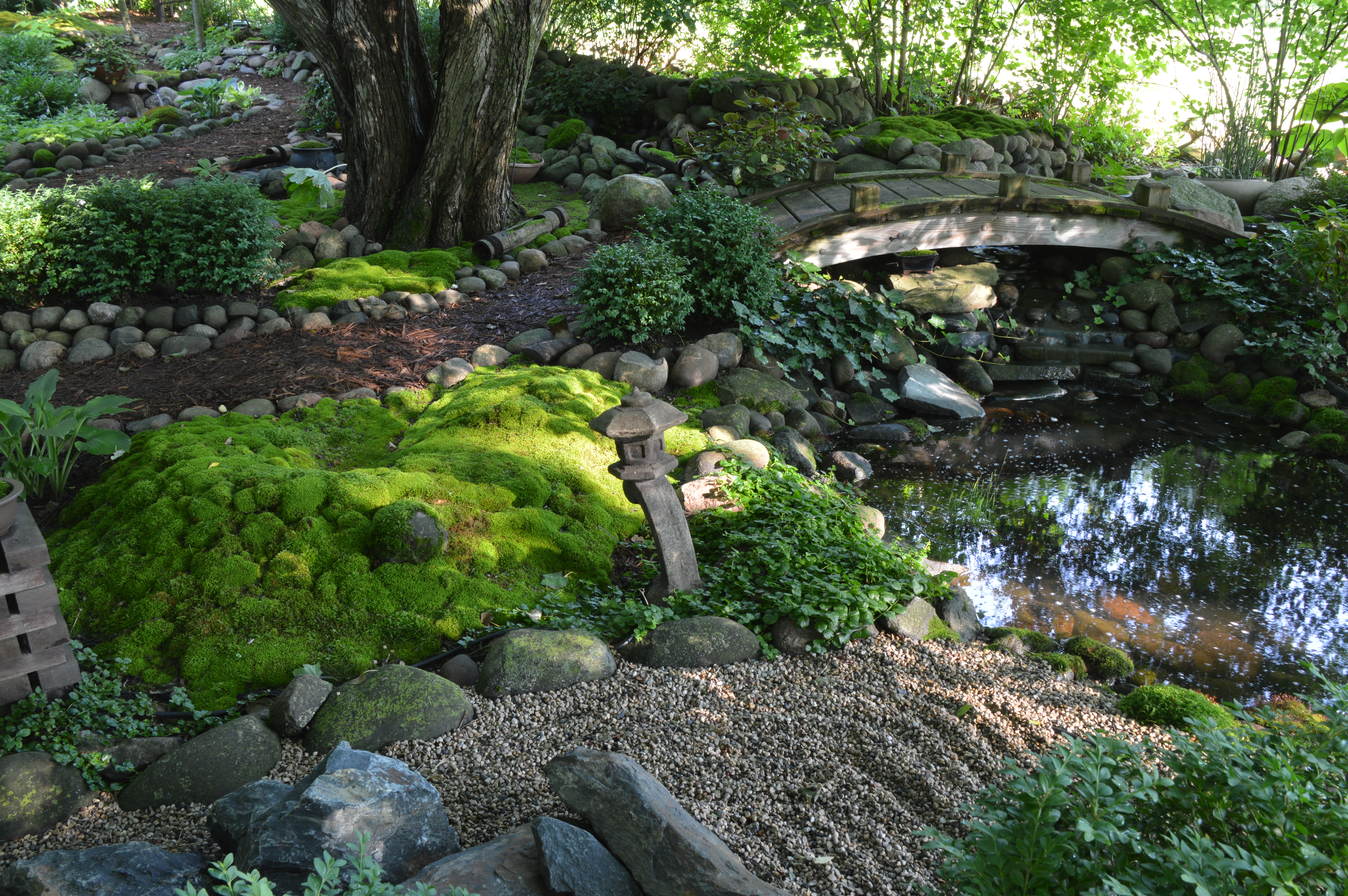
I built this bridge in my Japanese-style garden in 2001. I rebuilt it last fall, but I still must replace the two boards on the sides. A pump recirculates the water from the small pond to a small waterfall about ten feet behind the bridge. Moss grows on the rocks surrounding the pond, as they are constantly damp or wet. The red stems are called setae, and they hold the spore capsules until they dry and open to release the spores.
Saturday, March 13, 2021
Saturday, February 27, 2021
On to the Japanese Garden
Note: There will not be another post until late March, as I will be touring the Deep South (hopefully viewing lots of gardens.)
The final major garden featured in this long series of posts on my gardens is the Japanese Garden. I started to develop it in 2000--and, of course, I am still not done.
The first photo is of the west entrance to the garden along a path that is going downhill. The fence was built in 2013. It is made of ipe, a wood from Brazil, which is extremely dense, hard, and resistant to insects or other damaging items. I oil it every spring with rosewood oil, rosewood being another tropical tree. Hidden in the boxwood on the left is a rock shown in full in the second photo. It had been broken in half very long ago, probably when it was brought down from what is now Canada by the last glacier. I found it in a road ditch a quarter mile from my house. Water flows into it from a bamboo pipe, which then flows down a natural crack, then over its side and into the ground under it.
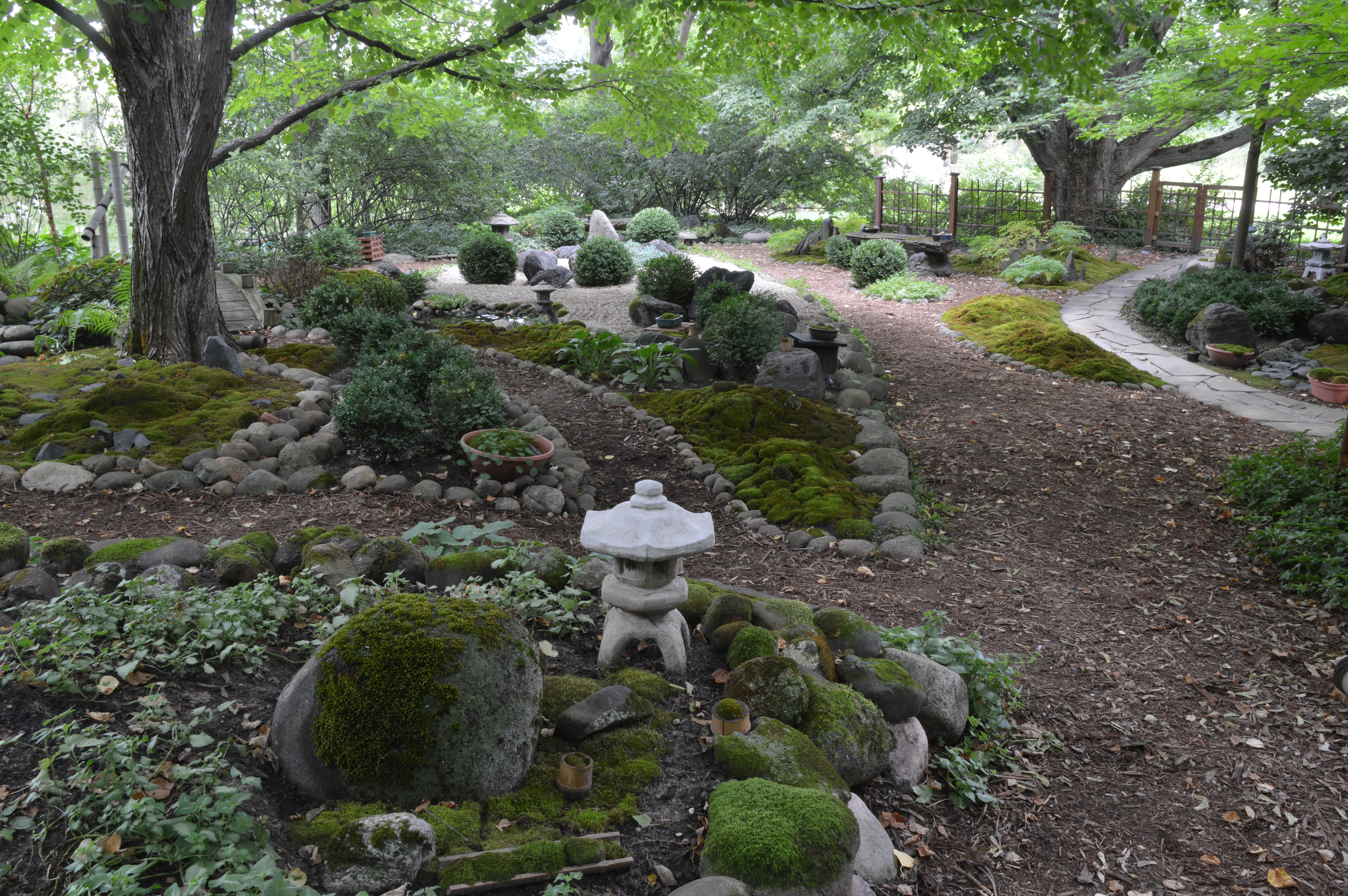
The third and fourth photos show the view just inside the gate, looking east through the upper part of the garden, which was developed about 2010. There are several areas of moss, in addition to some containers of moss, throughout this area. I visited over 60 temple gardens in Japan, and everyone has cultivated areas of moss.
The next three photos show the azumaya, or "viewing house." Such houses are common in Japanese gardens. I built it myself in 2014, the inside walls constructed of stucco. Also seen in these photos is a small stream I made, sourced with water from my well. It is forced through bamboo pipes in three separate water drops into small pools. The water then continues downhill to where it empties onto the ground amongst a grouping of boxwoods.
Subscribe to:
Posts (Atom)