Contact Form
Saturday, June 22, 2019
Sunday, June 16, 2019
The back lawn looked awful. Good!
In the last few years, my back lawn had a terrible infestation of both broadleaf and grassy weeds, and it was very thin in many areas. I am so happy--as it gave me the impetus to tear it out. That led to reducing its size by a third--and adding lots of new planting areas. Planning it out makes me feel like a kid in a candy store--so exciting!The first four photos shows me laying out the size of the new, reduced-size lawn, leaving lots of room for other plantings. The third photo shows me standing on the shade-tolerant grass, Poa supina. It is a paler green than the main grass, Poa pratensis, or Kentucky Bluegrass, a main reason I decided to plant ground covers and perennials in that area, instead.
The last three photos are actually of the moss garden from my previous post, showing its installation. I was not able to post them earlier.
Saturday, June 8, 2019
Before and after
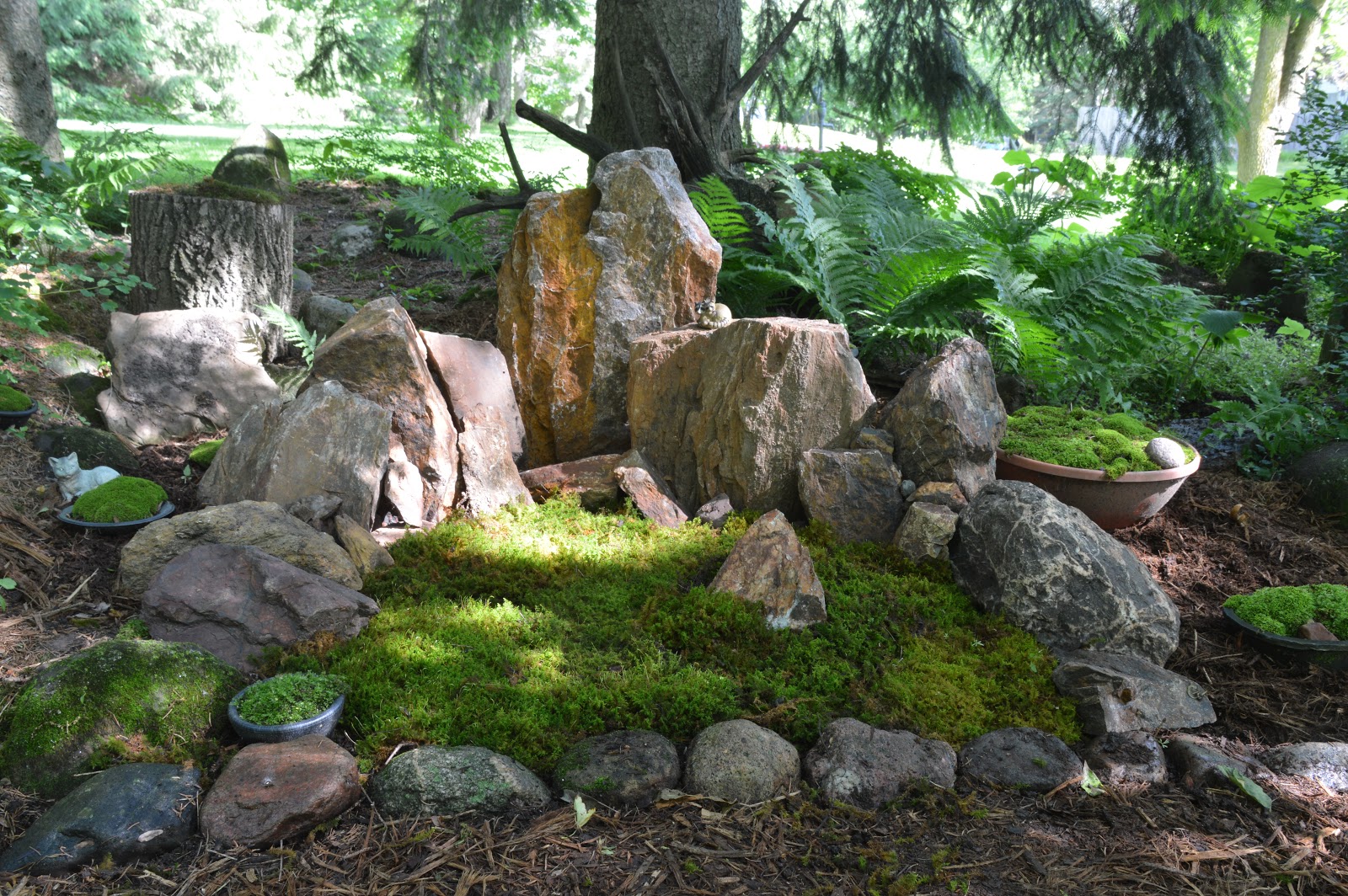
Three years ago, I built this small moss garden. I used some rocks I brought back from my friend's house in Cottonwood, Arizona. The moss I used was Thuidium delacatulum. Big mistake, as I built it directly under my neighbor's Norway Spruce tree, so lots of needles fell into the moss, which was almost impossible to remove. So, a month ago I replaced the moss with another moss, Anomodon rostratus, which is much easier from which to remove the needles. I think the whole garden is prettier.Tuesday, May 14, 2019
OK, the last of my winter travels
The last of my six winter foreign trips was to the Caucasus. Now it's time for my summer garden work.The first two photos are of a pretty plant in Baku, Azerbaijan. I'd appreciate knowing its name.
The next is a great hedge in an 1800s private garden near Telavi, Georgia. Nearby was a monastery with the most unusual olive tree I ever saw.
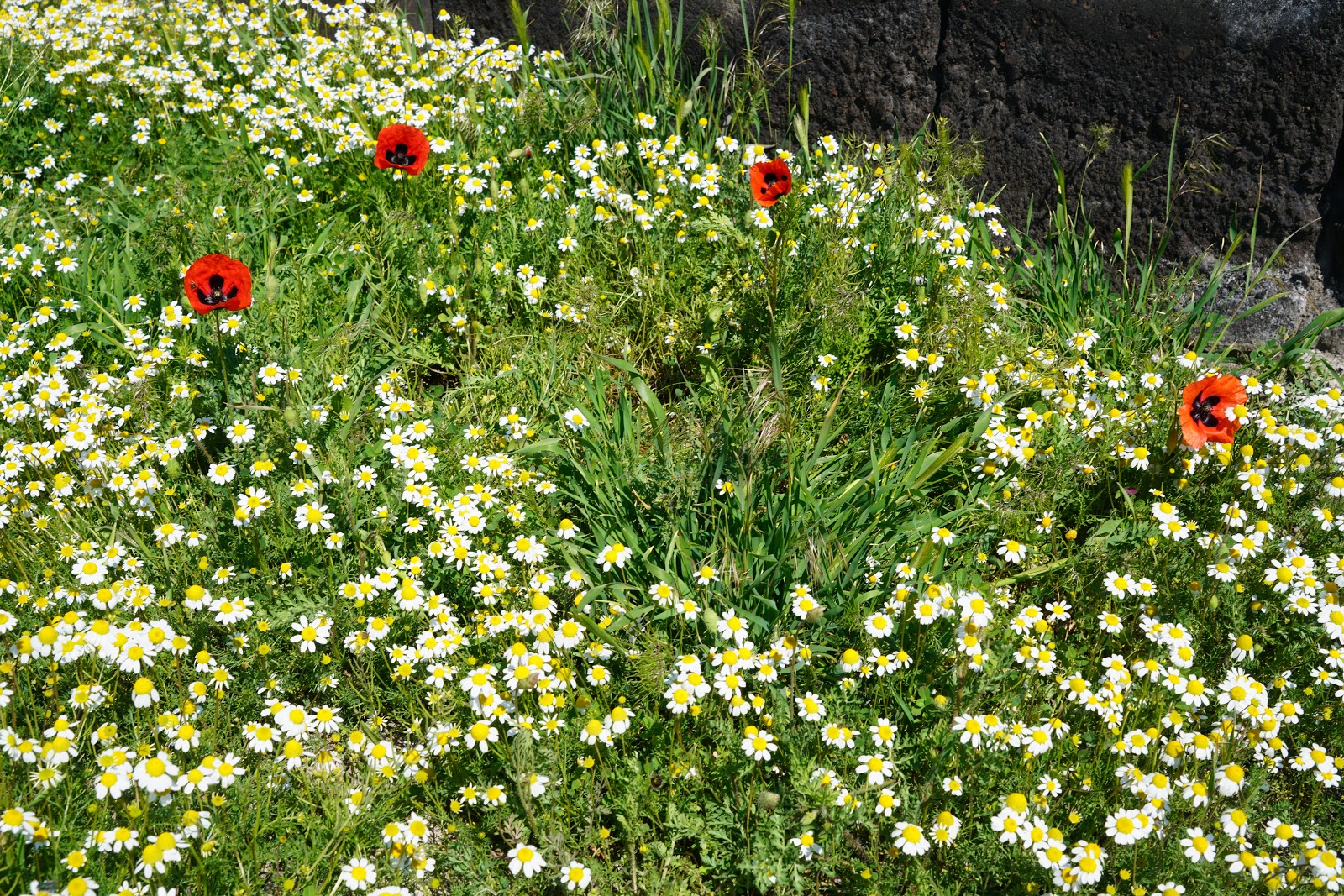
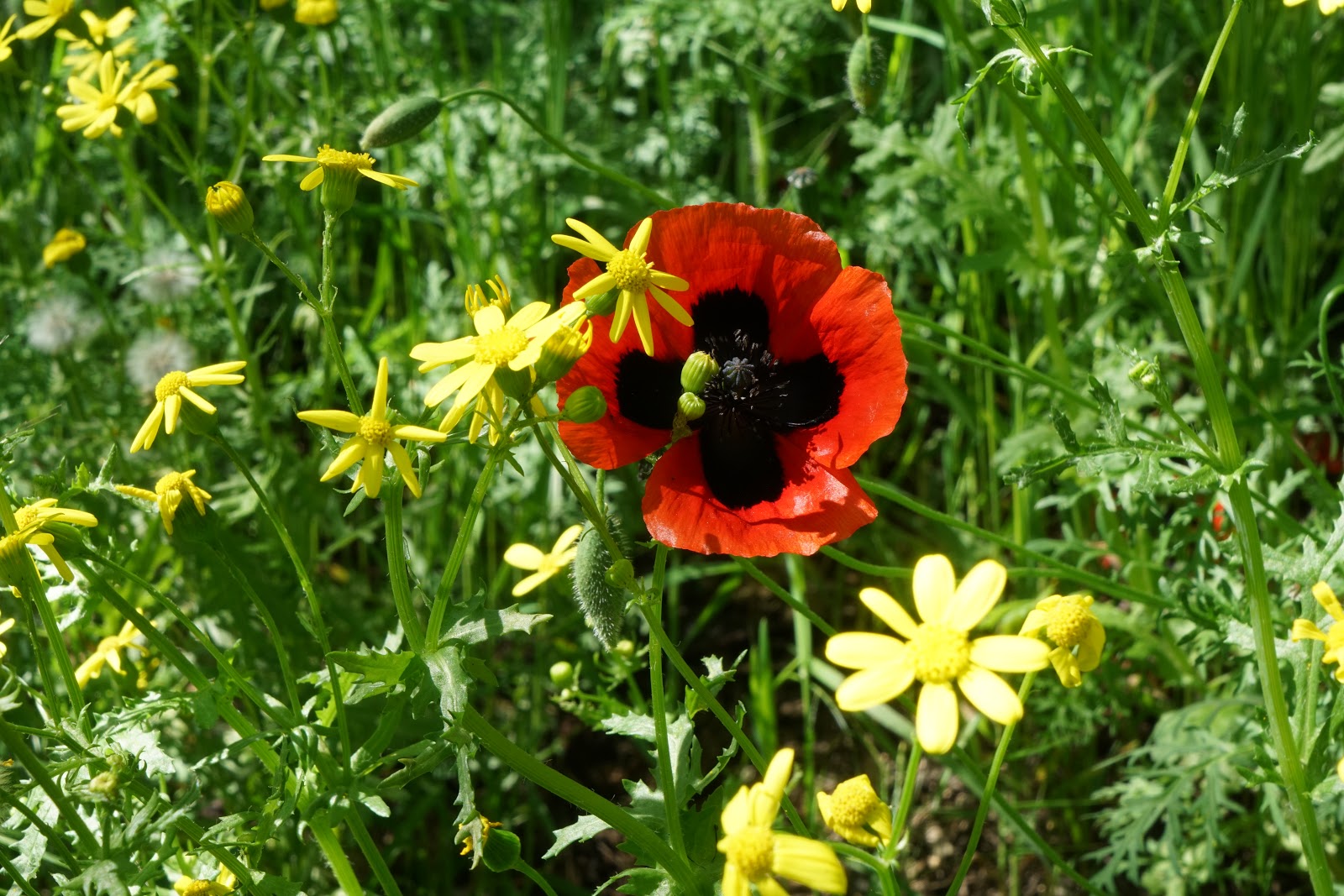
Poppies are everywhere in Armenia.
The last four were in Tbilisi, Georgia, first the new cathedral, then, I was told, a new species of a tree--Treeitis ferrousiana. Maybe someone was pulling my leg.
Wednesday, May 1, 2019
More of beautiful Tunisia
Here is round two of my Tunisia trip, all photos from the north part of the country, near the Mediterranean Sea.The first two photos show rape (the source of canola oil) with its beautiful yellow flowers, once near fields of winter wheat and once in a group of olive trees.
The next two photos show more olive trees, a common sight in Tunisia.
The last three photos were taken amongst the ruins of ancient Carthage. I found this beautiful plant with yellow flowers. I have not been able to identify it, so if anyone knows what it is, I would appreciate having its name.
Thursday, April 11, 2019
Tunisia. Really, what's there to see?
Note: I will be gone for a two-week trip to Georgia, Azerbaijan, and Armenia, so there will not be a post for several weeks.Recently I visited Tunisia. It's a desert country, so what could there be to see of horticultural beauty, one might ask. Plenty.
The first photo shows an "orchard" (what does one call it, anyhow?) of olive trees.
The second shows the male flowers of a palm sold in the medina of the city of Sfax. If people have only female palms, they then fertilize their trees with the pollen.
The next two photos show a pretty yellow-flowered bush in the desert. Unknown name, so I'd appreciate an identification.
I would also appreciate knowing the name of one of the toughest plants I've ever seen, a purple-flowered small plant growing along a road.
The next two photos were taken in a mud-house complex 300 years old, which was used to represent the town of Mos Espa on the planet Tatoonie in the Star Wars film, "The Phantom Menace."
The palms were growing in an oasis plantation in the southern desert. The desert also had the beautiful purple-flowering shrub next to a cactus, also needing a name.
More photos of Tunisia will appear in the next post--after I return from my next trip.
Monday, April 1, 2019
The Galapagos Islands are certainly interesting.
In 1835 Charles Darwin found the Galapagos Islands quite interesting. Of course, that led to his conception of the theory of natural selection and evolution. I, too, found it interesting, both the flora and the fauna.Given that the islands are volcanic and on the equator, plants face adversity in growing there. So, one can find some tough cacti there, shown in the first three photos.
The next photo shows perhaps the prettiest cemetery I have ever seen, followed by an acacia tree (unknown species).
The remaining photos are of lichens, ferns, mosses, and bromeliads, a bit surprising given the volcanic conditions.
Subscribe to:
Posts (Atom)